
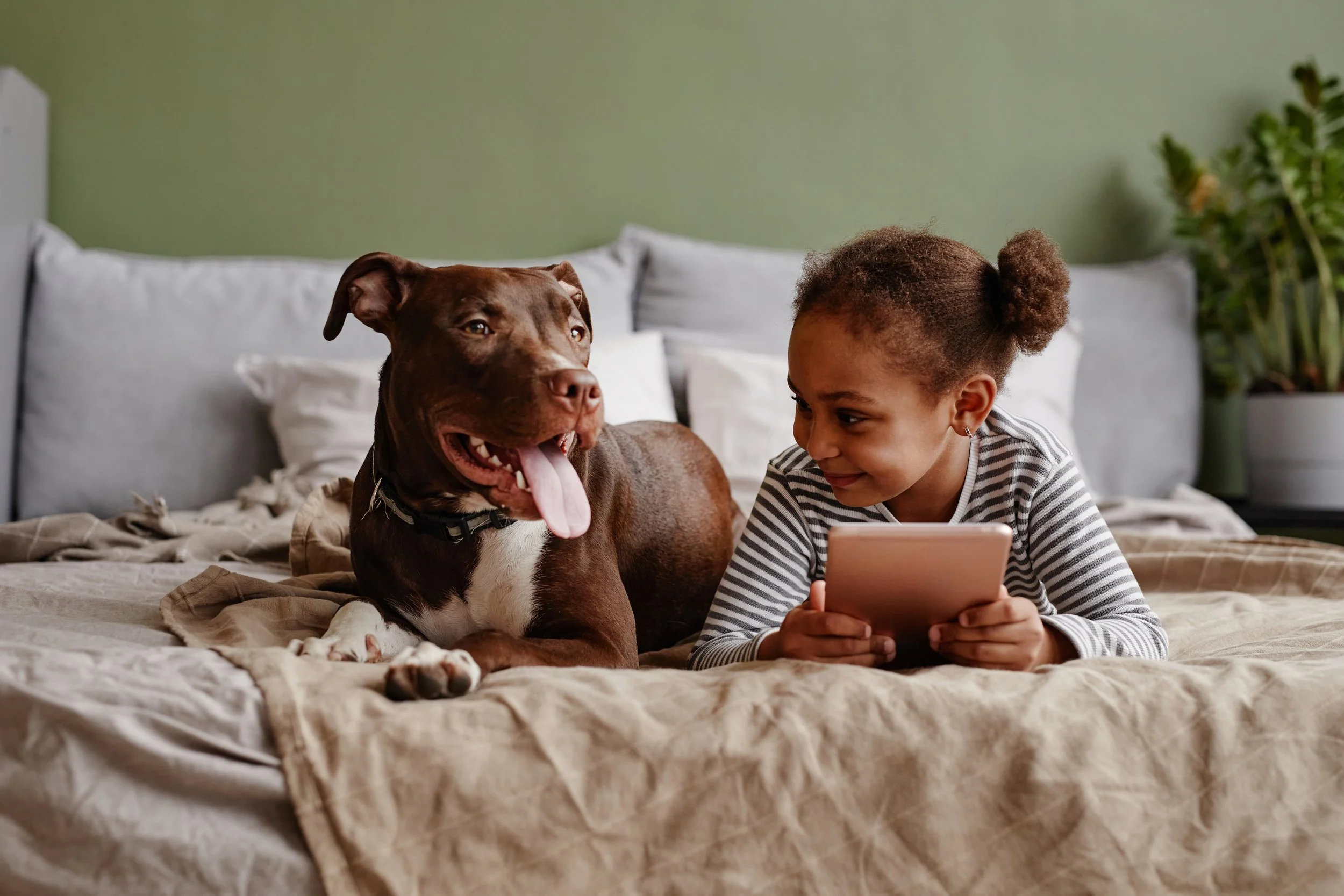
Kids & Dogs
Safe Interactions: Kids and Dogs
Children and dogs can form wonderful friendships—but only when interactions are calm, safe, and well-guided. Puppies, in particular, are still learning how to handle the fast, unpredictable energy of kids. This guide explains how to create positive experiences and prevent common challenges like chasing, nipping, and overexcitement.
Understanding Puppy Reactions
Kids often move quickly, make sudden gestures, and use high-pitched voices. These actions can be confusing or overstimulating for puppies. Some dogs may respond by:
Chasing or nipping: Grabbing clothes or following children persistently.
Becoming over-aroused: Jumping, barking, whining, or being unable to settle.
Acting fearful: Hiding, freezing, growling, or snapping.
Puppies don’t yet have the skills to stay calm around children’s movements. That’s why both kids and dogs need structured, repeated, and positive experiences together—not random exposure.
Keep Kids Safe Around Dogs
No running near the puppy.
Avoid screaming, squealing, or sudden loud noises.
No hugging, restraining, or putting faces close to the dog’s face.
Don’t bother the dog while resting, eating, or chewing.
No rough play.
Supervise adult-to-child-dog interactions 100% of the time.
If you notice situations that are difficult for your dog—such as kids running downstairs or doing homework—anticipate and manage them before they escalate.
Example 1:
Kids coming downstairs and the dog chases or nips.
Your plan (SOP): Have enrichment ready. Place the dog behind a baby gate with a chew as the kids come down. Alternatively, keep the dog on leash, reward calm behavior, and redirect attention with simple cues like “sit” or “touch.”
Example 2:
Dog nips at kids’ feet during homework.
Your plan: Offer enrichment in a gated area, or use a “place” cue to teach calm behavior nearby. Reward the dog for settling quietly while children work.
Encourage children to use soft voices, move slowly, and give the puppy space. Calm predictability creates trust and comfort.
Step 1: Management
Use baby gates, pens, or a crate when supervision isn’t possible.
Give your dog a quiet space to decompress.
If an adult leaves the room, either the dog or the children should go too.
Step 2: Training Sessions for Your Puppy
Work on skills that build confidence and impulse control:
Learning to settle calmly around children.
Practicing disengagement when overwhelmed.
Building positive associations—good things happen when kids are nearby.
Strengthening calm focus through basic obedience and enrichment.
Step 3: Teaching Kids puppy etiquette
Help children become gentle, respectful companions:
Understand dog body language.
Use soft voices and gentle touch.
Recognize when to leave the puppy alone.
Managing Nipping and Jumping
These are two of the most common puppy challenges. Nipping is normal—it helps puppies explore, play, and relieve teething discomfort. However, we want them to learn what’s appropriate to bite.
If you have a sporting breed or high-energy pup, be sure all basic needs are met: enrichment, training, rest, and age-appropriate exercise (roughly 5 minutes of walking per month of age).
Key management tips:
Keep the dog on leash when with kids.
Use gates or crates during active playtime.
Offer chews regularly.
Maintain a consistent daily routine with enough sleep.
📹 Watch: Stop the 77 - Kids and Dogs
Reward calm, desirable behaviors—four paws on the floor, quiet sitting, or gentle touches. Keep a treat jar near the door and scatter treats as the dog exits the crate to reduce jumping.
Avoid yelling or pushing the dog away; this can reinforce excitement. Instead, quietly interrupt, ask for an alternative cue like “sit,” and reward that behavior.
If the puppy bites:
Stop interacting and stand calmly.
Offer an appropriate chew toy.
When you re-engage, reward gentle mouth behavior or calm cues.
If biting continues, remove yourself, assess whether the pup is tired, take a potty break, and provide enrichment in the crate.
Offer a variety of chews—different textures and flavors help with teething discomfort. Frozen carrots are a favorite!
Remember, solving puppy biting isn’t about stopping the behavior—it's about redirecting it. Encourage mouthing on appropriate items while preventing unwanted rehearsal. Use long toys, sit on a chair during play, and take frequent short breaks to maintain calm energy.
When children are playing, keep your puppy occupied behind a gate with a chew or training game. Reinforce calm behaviors from a distance.
Most “unprovoked” nipping often has a simple cause: the puppy needs a nap!
A well-rested dog is a gentler dog.